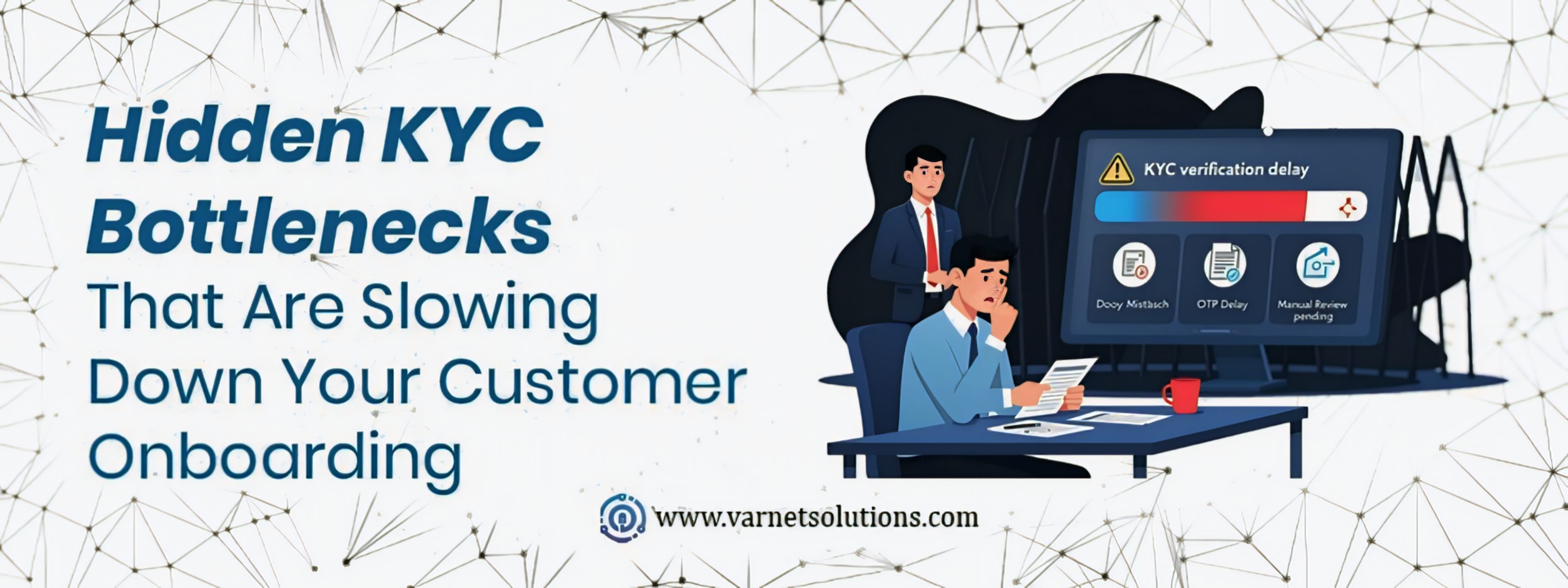
Hidden KYC Bottlenecks That Are Slowing Down Your Customer Onboarding
In today’s fast-moving digital economy, customer onboarding speed directly impacts business growth. Whether you are a fintech startup, NBFC, stockbroking firm, or any regulated business, KYC (Know Your Customer) is mandatory—but inefficient KYC processes can silently kill conversions.
Many businesses invest in marketing, ads, and lead generation—but lose customers during onboarding due to hidden KYC bottlenecks.
This blog uncovers the real, often ignored KYC challenges, and shows how modern digital KYC solutions can help you fix them using automation, compliance, and smarter workflows.
What Is KYC and Why It Matters for Onboarding?
KYC is the process of verifying a customer’s identity using documents like PAN, Aadhaar, and address proof. It ensures compliance with regulations set by authorities like RBI, SEBI, and FATF.
However, onboarding today is not just about compliance—it’s about speed, user experience, and conversion rate.
According to a report by McKinsey, companies that digitize onboarding can reduce customer acquisition costs by up to 90% and onboarding time by 80%.
The Hidden Problem: KYC Bottlenecks
Most businesses think their onboarding process is “working fine.” But behind the scenes, multiple inefficiencies slow down customer conversion.
Let’s break down the most common hidden bottlenecks.
- Manual Data Entry Delays
The Problem
Manual form filling, document uploads, and back-office verification slow everything down.
- Human errors increase rejection rates
- Teams spend hours validating data
- Customers abandon halfway due to friction
Real-World Example
A stockbroking firm handling 500+ daily signups faced a 40% drop-off rate due to long onboarding forms.
The Fix
Use KYC automation software to auto-fetch and validate user data instantly.
- Lack of Real-Time Verification
The Problem
Traditional KYC systems rely on delayed verification
- PAN validation done later
- Aadhaar verification processed manually
- No instant approval
This creates a waiting period, which kills user interest.
The Fix
Implement KRA Fetch Online and real-time API-based verification.
This allows instant data retrieval from KYC Registration Agencies (KRAs), reducing onboarding time from hours to seconds.
- Fragmented Systems & Tools
The Problem
Businesses often use multiple disconnected tools:
- CRM for leads
- Separate KYC tool
- Manual Excel tracking
- Email-based approvals
This leads to:
- Data duplication
- Communication gaps
- Delayed approvals
The Fix
Adopt integrated financial compliance tools that centralize onboarding, verification, and reporting.
- Poor User Experience (UX)
The Problem
Customers drop off when onboarding is:
- Too long
- Confusing
- Mobile-unfriendly
Google research shows that 53% of users abandon processes that take longer than 3 minutes.
The Fix
Modern onboarding automation focuses on:
- One-click KYC
- Minimal steps
- Mobile-first experience
- Delayed Document Signing
The Problem
Physical signatures or manual agreement uploads slow onboarding
- Customers delay signing
- Documents get lost
- Follow-ups increase
The Fix
Use Aadhaar eSign integration for instant digital signatures.
According to UIDAI, Aadhaar-based eSign is legally valid and widely accepted in India.
- Compliance Complexity
The Problem
- SEBI updates
- RBI guidelines
- AML compliance
Manual compliance leads to:
- Errors
- Penalties
- Audit risks
The Fix
Use automated financial compliance tools that stay updated with regulatory changes.
- Lack of Automation in Follow-Ups
The Problem
- No reminders
- No tracking
- Lost leads
The Fix
Smart onboarding automation systems send
- Auto reminders
- Status updates
- Follow-up notifications
- No Centralized Reporting & Analytics
The Problem
- Drop-off points not tracked
- Approval time unknown
- Conversion rates unclear
Without insights, optimization is impossible.
The Fix
Use dashboards in KYC automation software to track performance in real-time.
How Digital KYC Fixes These Bottlenecks
Modern digital KYC solutions are designed to eliminate inefficiencies.
Benefits at a Glance
- Instant verification
- Reduced onboarding time
- Real-time tracking
- Strong compliance
- Higher conversions
Step-by-Step: Optimized KYC Workflow
- Step 1: User Enters Basic Details
Minimal input required
- Step 2: KRA fetch online
Auto-fetch KYC data instantly
- Step 3: Document Upload (if required)
AI verifies documents
- Step 4: Aadhaar eSign integration
Customer signs digitally
- Step 5: Automated Compliance Check
Using financial compliance tools
- Step 6: Instant Approval
Customer is onboarded within minutes
Real Business Impact
Companies using KYC automation software report:
- 60–80% faster onboarding
- 30–50% higher conversion rates
- Reduced operational costs
- Better compliance accuracy
(Source: Deloitte Digital Banking Report)
Common Myths About Digital KYC
Myth 1: Digital KYC is not secure
Reality: Advanced encryption and API security make it highly secure.
Myth 2: It’s expensive
Reality: It reduces long-term operational costs.
Myth 3: Manual KYC is more reliable
Reality: Automation reduces human error significantly.
Expert Tips to Improve Your KYC Process
- Keep onboarding under 3 minutes
- Use API-based verification
- Enable mobile-first design
- Automate follow-ups
- Track analytics regularly
Frequently Asked Questions (FAQs)
1. What are the biggest KYC bottlenecks?
Manual processes, delayed verification, poor UX, and lack of automation.
2. How does digital KYC solutions improve onboarding?
It automates verification, reduces time, and improves customer experience.
3. What is KRA fetch online?
It retrieves customer KYC data instantly from registered agencies.
4. Why is Aadhaar eSign integration important?
It enables instant, legally valid digital signatures.
5. What are financial compliance tools?
Software that ensures adherence to regulatory guidelines automatically.
6. How does onboarding automation help businesses?
It reduces manual work, speeds up onboarding, and improves conversions.
Conclusion Transform Your KYC with Varnet Solutions
At Varnet Solutions, we provide advanced KYC automation through ProvisionPro, designed to simplify onboarding with:
- End-to-end Onboarding Automation
- Seamless Aadhaar eSign Integration
- Real-time KRA Fetch Online
- Powerful Financial Compliance Tools
- Centralized dashboards & reporting
Simplify your onboarding. Improve conversions. Stay compliant.
Varnet Solutions – Empowering Businesses Through Smart Technology